Quiet Drones 2026
Speakers 2026
Keynote Speakers
Page last updated 20 January 2026
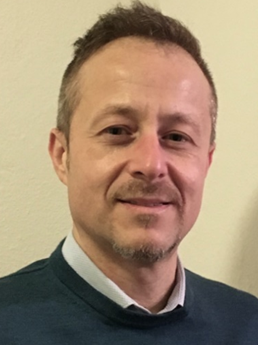
Damiano Casalino (Dassault Systèmes & TU Delft)
Recent advances in low-Reynolds number rotor aeroacoustics models.
Damiano Casalino, PhD in fluid-dynamics (Turin Polytechnic) and acoustics (Ecole Centrale de Lyon) has research interests in aeroacoustics that cover frequency-domain CAA for duct acoustics and installation effects, sound propagation in sheared flows, integral methods, stochastic noise generation, advanced experimental techniques for space launcher noise, helicopter trajectory optimization, vortex-airfoil interaction noise, acoustic liners and porous treatments.
Damiano is currently R&D director at Dassault Systèmes and chair of aeroacoustics in the aerospace faculty of Delft University of Technology. His main focus is on the industrial exploitation of the lattice Boltzmann method for airframe and engine noise prediction. More recently, he has started developing methodologies for Urban/Advanced Air Mobility and Wind-Energy applications. His current research goal is to integrate computational aeroacoustics in system engineering frameworks for aircraft, rotorcraft and wind-turbine community noise prediction in realistic operational scenarios.
Damiano has co-authored about eighty archival journal publications in the field of aeroacoustics, co-authored several patents and has obtained the Aeroacoustics Award in 2023 from the Council of European Aerospace Societies.
About the Keynote
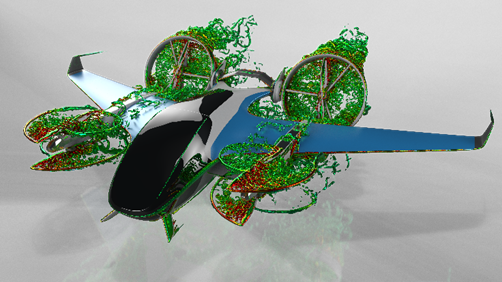
The keynote lecture will review the most recent achievements in Lattice Boltzmann simulations of low-Reynolds number rotor aeroacoustics with emphasis on transitional boundary layer mechanisms. The first part of the presentation discusses the experimental and numerical benchmarking challenges, by focusing on aspects related to the scale-resolving capabilities of the employed turbulence model, and to the effects due to flow recirculation in the test chamber. The second part of the presentation introduces a methodology for the calculation of unsteady forces and noise in variable RPM conditions. Finally, an overview of a flight mission analysis framework for eVTOL vehicles is presented.
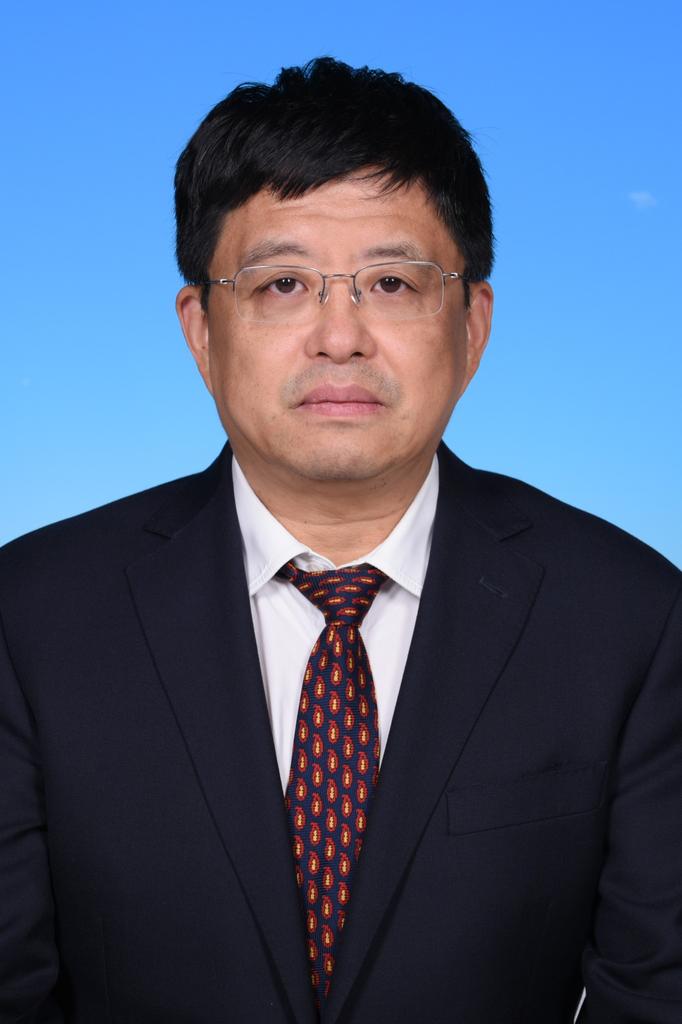
Xin Zhang (Hong Kong University of Science and Technology)
Sound transmission of drones in urban wind conditions.
Xin Zhang is the Swire Professor of Aerospace Engineering and Chair Professor, and the Director of the Aerodynamics and Acoustics Facility at the Hong Kong University of Science and Technology (HKUST). He had a PhD from the University of Cambridge. Xin Zhang is a Fellow of the Royal Aeronautical Society and a Fellow of the Hong Kong Institution of Engineers. He is mainly engaged in the research and development of aerodynamics and noise of aircraft, aero engines, unmanned aerial vehicles, and electric aircraft, as well as aero sports technology. Between 2008 and 2015, he was Airbus Professor of Aircraft Engineering and Director of the Airbus Aircraft Noise Technology Centre at University of Southampton, UK. His research team (https://aantc.ust.hk/) works closely with the domestic and international aviation industry including eVTOL industry. Professor Xin Zhang serves as the vice president of the Hong Kong Aviation Industry Association (HKAIA).
About the Keynote
This keynote lecture will discuss the challenges and recent advances in evaluating sound transmission in inhomogeneous urban wind environments, with the aim of correctly and efficiently capturing the relevant acoustic physics at HKUST. First, a computational method based on a variant of Gaussian Beam Tracing (GBT) is introduced to investigate the impact of inhomogeneous mean airflow on multi-frequency sound transmission. The complex physics of broadband drone noise mapping is then described, including waveform distortion, steepening, and folding, arising from the accumulation of absorption mechanisms and dispersion in urban wind environments. Second, an acoustic scattering model based on high-order beam series is proposed to assess the impact of unsteady local airflow structures on sound transmission. Third, an efficient real-time prediction tool is developed using a machine learning (ML) approach. The model is based on a U-shaped neural network (U-Net) trained on data generated by the aforementioned GBT methods.
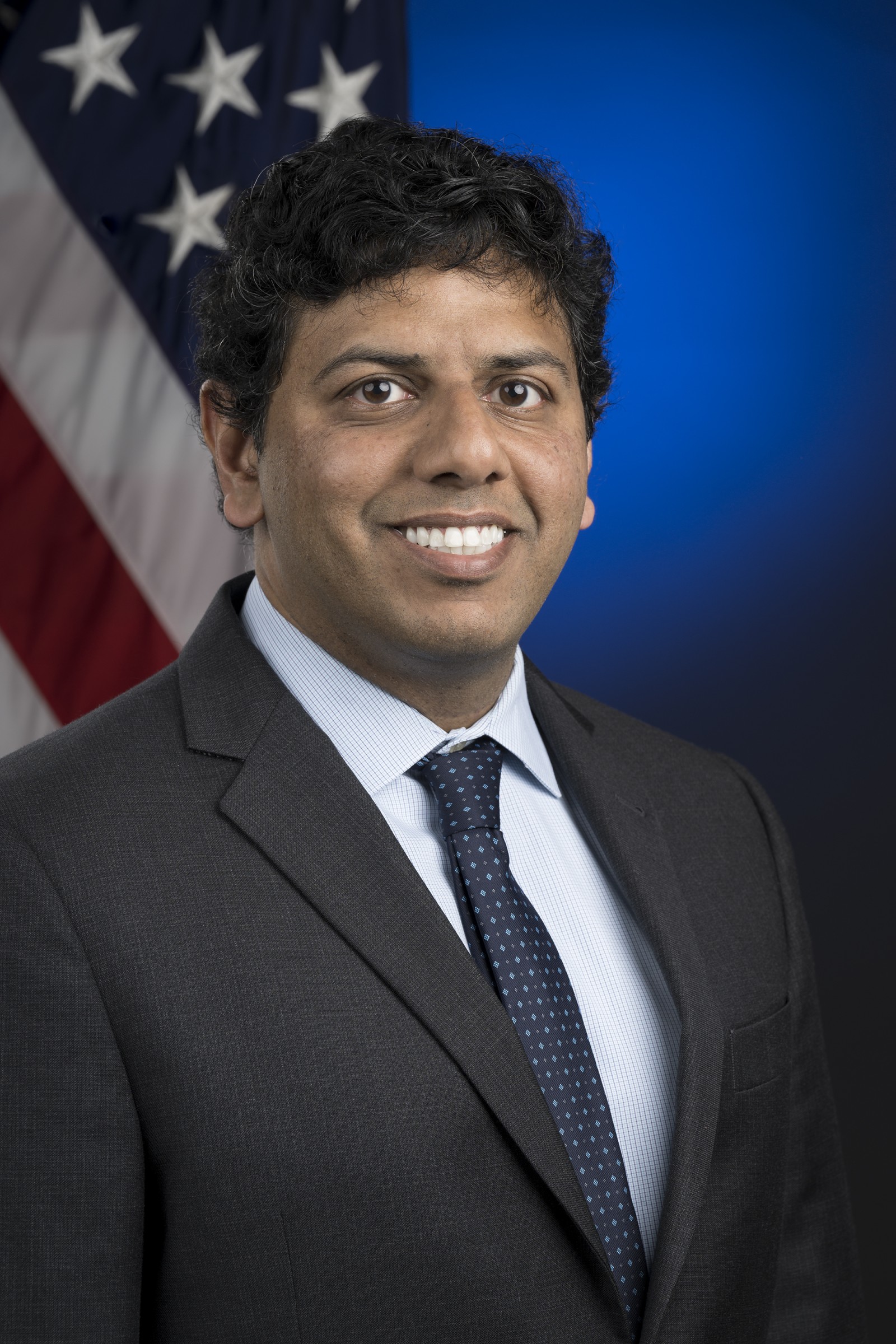
Siddhartha Krishnamurthy (NASA Langley Research Center )
A Brief History and Recent Efforts of Psychoacoustic Testing at NASA.
Siddhartha Krishnamurthy, PhD (Harvard University) has been a researcher in the Flight Vehicle Acoustics Branch at NASA Langley Research Center in Hampton, Virginia, USA, since 2017. His research interests are in aviation noise auralization and psychoacoustics. He currently leads a research team at NASA that focuses on understanding the noise response to Advanced Air Mobility (AAM)/Urban Air Mobility (UAM) vehicles. He also led the development of remotely administered psychoacoustic testing at NASA to enhance capabilities for evaluating human response to aircraft noise. For this development, his team earned the NASA 2023 Group Achievement Honor Award and Dr. Krishnamurthy earned the 2024 – 2025 Exceptional Achievement Medal Honor Award.
About the Keynote
This keynote lecture will provide a brief history and an overview of recent efforts of the National Aeronautics and Space Administration’s (NASA’s) investigations into aviation noise human response, or psychoacoustics. An overview will be given of the different facilities used by NASA for psychoacoustic testing. The different aviation noise sources that NASA has studied over many decades for their human response are briefly reviewed. Focus will then be given to more recent rotorcraft noise response testing, including work on AAM/UAM vehicle noise response.
